
· by Michael Blair, Nashville's Flooring
Most people think about color, fiber and pad when they plan new carpet. The Carpet and Rug Institute’s installation standard for homes, CRI 105, spends its early pages on something else: what the house has to be like before the carpet arrives, and what the floor underneath can be. Both matter more than they sound. A carpet laid in a closed-up house in August, or over old floor material that someone sanded flat, can cause trouble that a better pad will not fix. Here is what the standard asks, and how we handle it on our carpet installations.
What does the house need before carpet goes in?
The heat or air conditioning has to be working, and the rooms have to be held at normal living conditions for at least 48 hours before the install, during it, and for 72 hours afterward. Section 7.2 of the CRI 105 Standard for Installation of Residential Carpet sets those conditions as an indoor temperature of 65 to 95 °F with relative humidity no higher than 65 percent, and the floor surface itself no colder than 65 °F when the carpet goes down. Where those conditions cannot be met, the standard sends you to the carpet maker about what that means for the warranty.
It also asks that carpeted rooms never drop below 50 °F, however long ago the carpet was installed. That one matters for a vacant rental or a house for sale with the heat shut off over a Middle Tennessee winter.
In practice the conditions catch two kinds of house. One is a renovation where the new air handler is not hooked up yet, so the house is sitting open to the weather. The other is a house closed up in summer with the air off, where indoor humidity can climb past the limit. In both, we would rather move the install date than lay carpet into the wrong conditions.
Old vinyl under the carpet
Carpet can go over existing vinyl or other resilient flooring if that floor is firmly bonded down and any wax, sealer or finish on it has been removed, according to section 8.4 of CRI 105. The same section does not recommend carpet over floating floors, sheet vinyl glued only at the edges, or cushion-backed sheet goods.
This comes up most in older houses, where the carpet in a bedroom or den was often laid over the vinyl or tile that came before it. If you are weighing whether carpet belongs in those rooms at all, our post on carpet in the bedrooms or hard floors throughout covers that choice.
Could the old flooring under your carpet contain asbestos?
It could. CRI 105 notes that some sheet vinyl, resilient tile and cut-back asphalt adhesive, the black glue under old tile, may contain asbestos or crystalline silica. The U.S. EPA’s page to learn about asbestos lists vinyl floor tiles, the backing on vinyl sheet flooring and flooring adhesives among the places it has been used, and explains that exposure comes mainly when the material is disturbed or damaged.
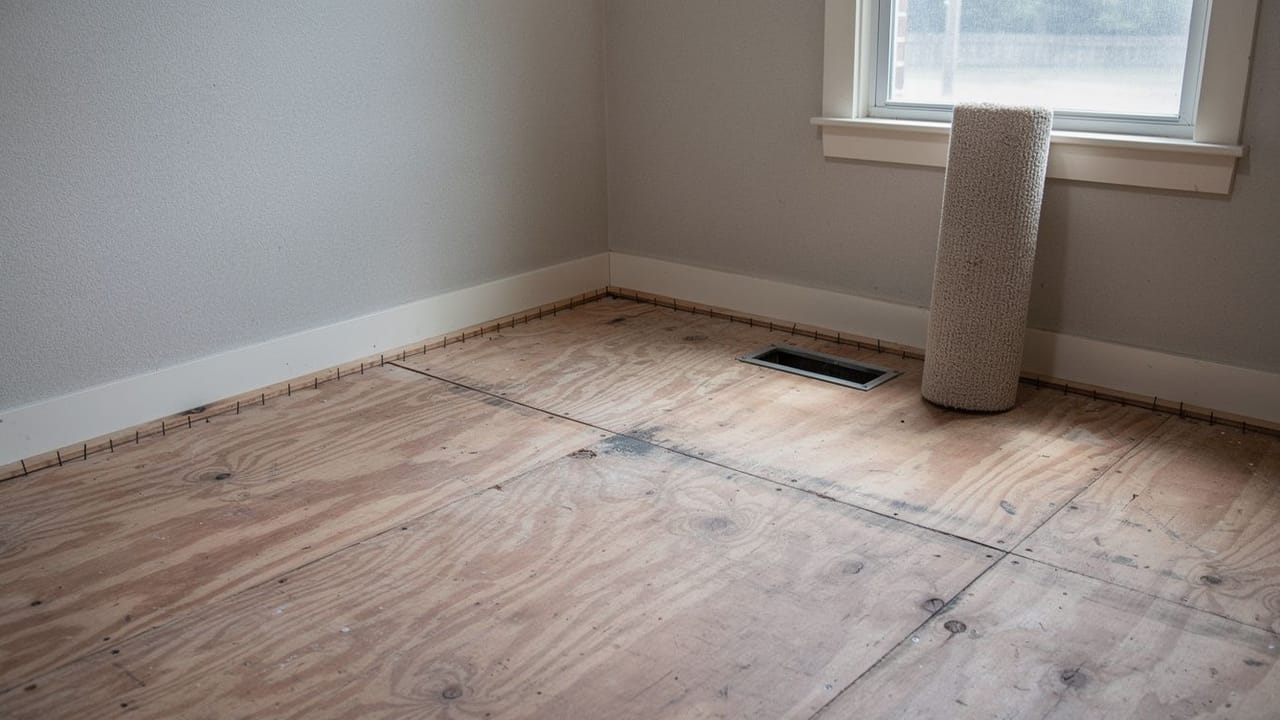
So the standard is firm about what not to do. Its recommended practice rules out sanding, dry scraping, bead-blasting or otherwise grinding up those materials, and it says any removal has to follow federal, state and local rules. When we pull up old carpet and find vinyl or dark adhesive underneath, we leave it alone. If it is sound and bonded, covering it is the lower-disturbance path. If it has to come up, it gets tested first, and removal goes to people qualified to do it.
Does a slab or a heated floor change the install?
A heated floor does; a plain slab usually does not need extra testing. Section 6.0 of the standard says most residential stretch-in installations, the kind with tack strip and pad, do not require moisture testing. Other floors that go onto a slab have their own rules, which our post on flooring over a concrete slab goes into.
Radiant heat is the exception. Section 8.5 calls for special consideration, caps the floor’s surface temperature at 85 °F, and says tack strip should be glued rather than nailed where nobody knows how deep the heating lines run. If you have floor heat, tell us before we measure.
Whether your house is in Nashville or out in the counties, send us the rooms and what is under the carpet now, and we will tell you what has to happen before the new carpet is scheduled.
Sources
- Carpet and Rug Institute: CRI 105 Standard for Installation of Residential Carpet — Section 7.2 site conditions (HVAC, 65 to 95 °F, 65 percent humidity, 48 and 72 hours, 50 °F floor); 6.0 moisture testing; 8.4 resilient floors and the asbestos and silica caution; 8.5 radiant heat.
- U.S. EPA: Learn About Asbestos — Vinyl floor tiles, sheet vinyl backing and adhesives listed among products that may contain asbestos; exposure when disturbed or damaged.
FAQ
What the House Needs Before New Carpet Goes In — questions
Can you put carpet over vinyl flooring?
Often, yes. The carpet industry’s installation standard allows carpet over vinyl that is firmly bonded down, once any wax, sealer or finish is removed. It does not recommend carpet over floating floors, sheet vinyl glued only at the edges, or cushion-backed sheet goods. Old vinyl should be left intact rather than sanded or scraped.
Does new carpet need the air conditioning running?
Yes. The standard asks for the heat or air conditioning to be working and the rooms held at 65 to 95 °F with humidity no higher than 65 percent, for 48 hours before installation, during it and 72 hours after. In a closed house without air in summer, humidity can run past that limit.
What temperature should a house be for carpet installation?
Between 65 and 95 °F indoors, with the floor surface itself no colder than 65 °F when the carpet goes down. Those conditions should hold for two days before and three days after. Afterward, carpeted rooms should never be allowed to drop below 50 °F, even years later, which matters in a vacant house over winter.
Is it safe to pull up old vinyl tile under carpet?
Not without knowing what it is. Some older vinyl tile, sheet vinyl backing and black adhesive may contain asbestos, which is released mainly when the material is disturbed. Do not sand, grind or dry-scrape it. Have it tested first, and leave removal to people qualified to do it under the applicable rules.
Can carpet go over a floor with radiant heat?
It can, with care. The carpet installation standard limits the floor surface to 85 °F under carpet and asks for tack strip to be glued down rather than nailed when nobody knows how deep the heating lines run, so a nail cannot reach them. Tell the installer about the floor heat before anyone measures the rooms.