
· by Michael Blair, Nashville's Flooring
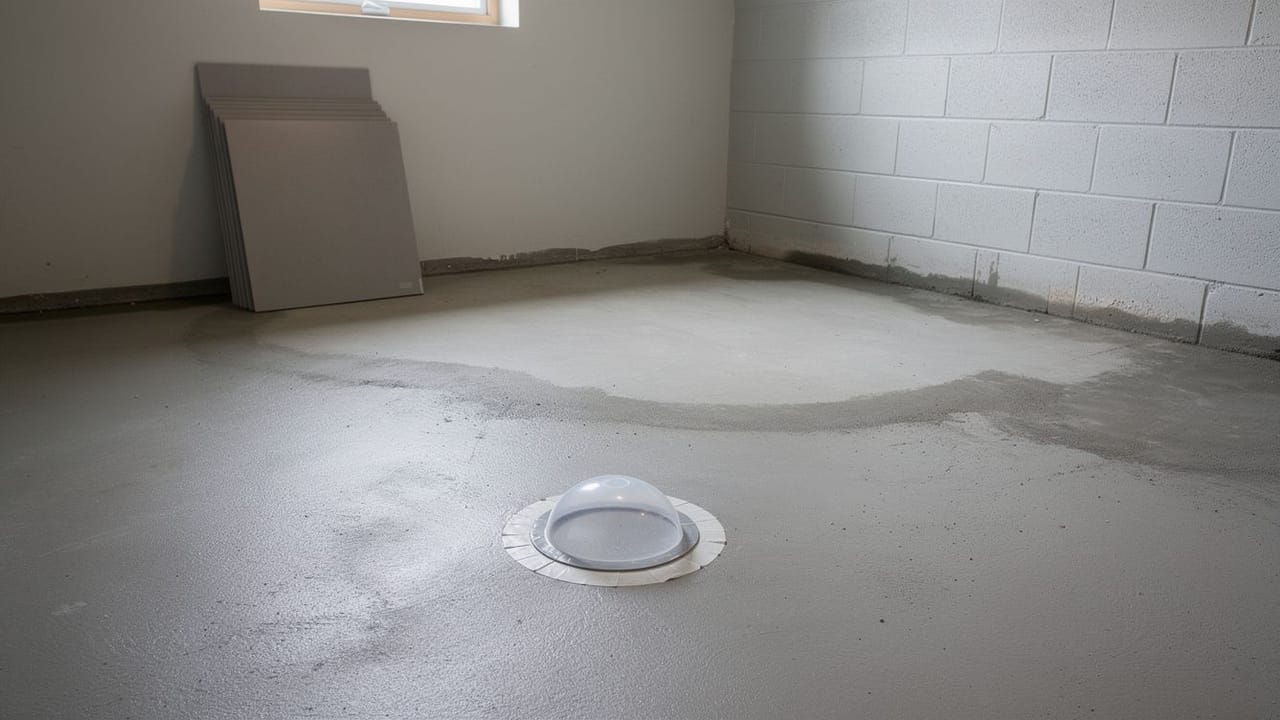
A new slab can still be too wet for flooring, which is why it gets tested before installation, and a slab on grade also takes on moisture from the ground beneath it. The EPA’s moisture control guidance describes both routes: liquid water wicking up from the fill under the slab, and water vapor migrating through the concrete. Its list of common slab failures includes moisture-sensitive or impermeable flooring laid over a slab still giving off too much vapor, often where no emission test was run.
Why the test matters
Moisture moving up through a slab has to go somewhere. Under an impermeable floor it collects at the bond line, and the EPA guidance says the adhesive that holds flooring to a damp slab may not cure properly, which leaves the flooring loose and mold growing in the adhesive. The guidance calls for a vapor retarder sheet directly under the slab, one meeting ASTM E1745 Class A, B or C, but from above you can’t tell whether a slab has one.
The two standard tests measure different things. ASTM F1869 uses anhydrous calcium chloride to find how much vapor the slab gives off, in pounds of moisture over 1,000 square feet in 24 hours, and ASTM F2170 reads the relative humidity inside the concrete with probes set into it. Many manufacturers write a moisture limit into their installation instructions, and the EPA notes that a test may be required to keep a manufacturer’s warranty, so we read the instructions for the product you’ve picked before we quote it.
Which floors can go over a damp slab?
No floor is immune to a wet slab. The EPA guidance pictures tile whose adhesive failed to cure because of water and high pH in the concrete, and a hardwood floor warped by water rising through the concrete beneath it. How much moisture a given tile mortar, vinyl plank or engineered wood product will accept is set by whoever made it, so the stated limit on that box decides the question more than the category does. Our hardwood installation page covers what we do when a customer wants wood on the ground floor.
Carpet is more sensitive than people expect. The EPA’s guide to mold and moisture in the home names the underside of carpets and pads among the places mold hides, and says porous materials like carpet may have to be thrown away once they become moldy.
- Tile: the mortar or adhesive has its own moisture limit
- LVP: check the stated limit for that product
- Engineered wood: a passing test and the maker’s slab requirements
- Solid hardwood: warps when water rises through the slab
- Carpet: mold can grow unseen on the underside of the pad
Flatness is the other slab problem
Slabs are finished to a flatness tolerance, not to a perfect plane, and ASTM E1155 is the method that measures a floor’s profile and turns it into flatness and levelness numbers. We check for low spots before a floating floor goes in, because a plank spanning a dip can flex and sound hollow underfoot.
Self-leveling compound fills the low spots, and when a slab needs it we put it in the quote instead of finding it on install day; it is part of our subfloor and leveling work. The order matters too: F1869 says the calcium chloride test shall not be run over patching or leveling compounds, so the moisture test comes first.
What makes a basement floor different?
A basement floor sits below grade with surfaces that are often cooler than the air, so it can collect condensation as well as vapor coming through the slab. The EPA’s mold course explains that condensation may form when warm, humid air meets a cold surface, and the moisture guidance recommends insulating slab-on-grade foundations to keep the floor from sweating in warm, humid weather. Address drainage outside before choosing a floor inside: the EPA traces one warped floor to rainwater that was never drained away from the foundation.
Where the basement has any history of water, we steer away from anything glued or organic. The EPA says water-damaged materials should be dried within 24 to 48 hours to prevent mold, and a glued floor can’t be lifted to dry. Tile, or a click LVP that can come up, is what we usually suggest below grade; our post on what the waterproof label means explains why the plank surviving water is not the same as the slab surviving it. If you’re weighing a floor for a slab now, ask us to test it with your free estimate.
Sources
- US EPA, Moisture Control Guidance for Building Design, Construction and Maintenance (EPA 402-F-13053, 2013) — Wicking and vapor through slabs; damp slabs and uncured adhesive, loose flooring, mold in adhesive; tile and hardwood failures; tests for warranty; E1745 retarder under slab; slab sweating; drainage
- ASTM F1869-23, Moisture Vapor Emission Rate of Concrete Subfloor Using Anhydrous Calcium Chloride — Calcium chloride test, pounds per 1,000 sq ft per 24 hours; not to be used over patching or leveling compounds
- ASTM F2170-19, Relative Humidity in Concrete Floor Slabs Using in situ Probes — In-situ relative humidity probe test
- ASTM E1155-20, Determining FF Floor Flatness and FL Floor Levelness Numbers — Slab flatness and levelness measured as numbers
- ASTM E1745-17, Plastic Water Vapor Retarders Used in Contact with Soil or Granular Fill under Concrete Slabs — The specification for the vapor retarder under a slab
- US EPA, A Brief Guide to Mold, Moisture and Your Home — Mold under carpets and pads; moldy carpet may have to be thrown away; dry within 24 to 48 hours
- US EPA, Mold Course Chapter 2 — Condensation where warm, humid air meets a cold surface
FAQ
Putting Flooring Over a Nashville Concrete Slab — questions
How can I tell whether my slab is too damp for hardwood?
Not reliably by looking at it. The two measurements are a calcium chloride test, which gives the rate of vapor coming out of the slab over 24 hours, and an in-situ relative humidity test, which reads the humidity inside the concrete with probes. Those numbers are what a flooring manufacturer’s limits are written in, and the calcium chloride test has to be done on bare concrete, before any leveling compound or patching goes down.
Can I put hardwood in a Nashville basement?
Solid hardwood on a basement slab is a risk we don’t recommend. The EPA’s moisture guidance shows a hardwood floor warped by water rising through the concrete beneath it. If you want wood below grade, the installation instructions for that specific product decide whether it can go over concrete and what the slab has to test at, and tile or LVP are what we usually suggest instead.
Does an old slab still release moisture?
It can. The concrete may have cured decades ago, but without a vapor retarder or capillary break beneath it, moisture from the ground can keep wicking up through the slab, and the EPA guidance describes water moving through concrete that way. A sheet under the slab is often required in current construction, but you can’t see from above whether an older slab has one, so age is not a substitute for testing.
Why does a concrete slab sweat?
Warm, humid air condenses on it, because the slab is cooler than the air above it. Basement floors are the usual case, since they sit below grade and can collect condensation on top of the vapor coming up through the concrete. EPA’s moisture guidance recommends insulating slab-on-grade foundations to keep floors from sweating in muggy weather.