
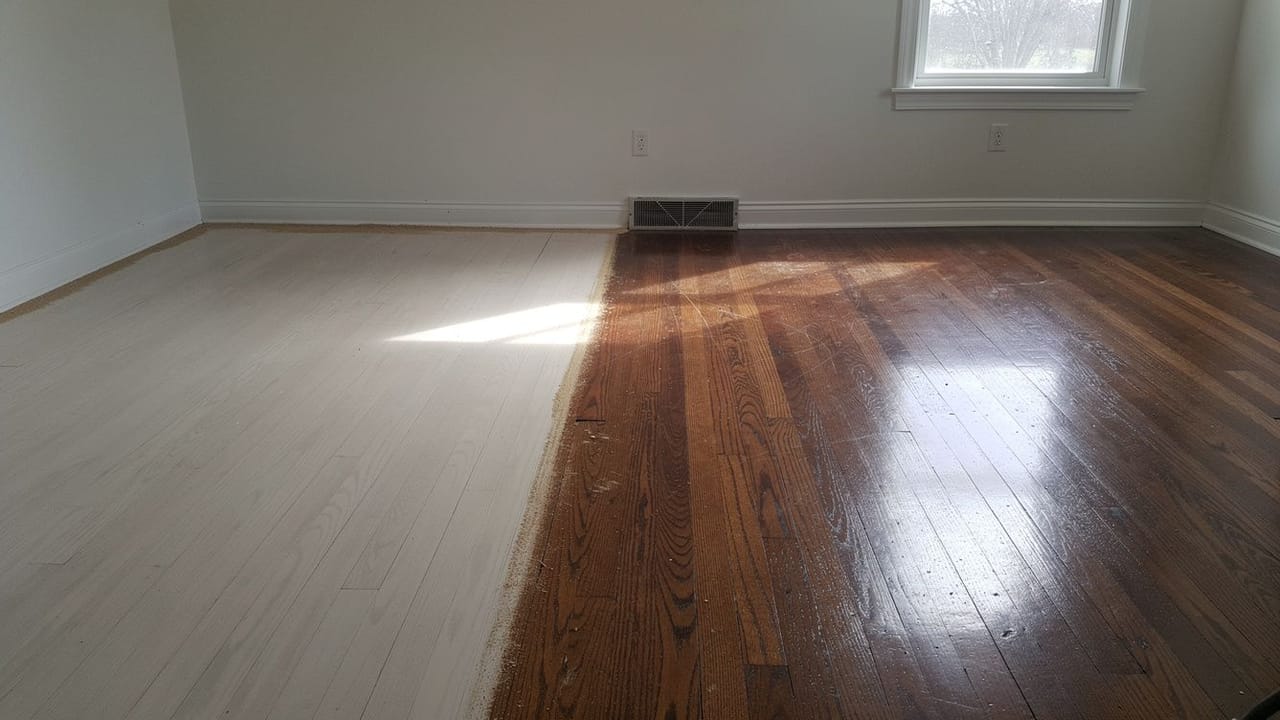
· by Michael Blair, Nashville's Flooring
A hardwood floor that looks tired is not, on that alone, a replacement job. A few specific conditions rule refinishing out, and none of them is simply looking worn.
How much wood is left
There is no fixed number of sandings. The National Wood Flooring Association’s page on refinishing your floors says the count depends on the skill of the contractor, the equipment, the thickness of the wear layer, and the flatness and condition of the floor. What that means in practice is that the wood above the tongue is limited, and every full sand spends some of it, which is why we size up the floor before we quote a hardwood refinishing job.
We look at a floor register or a doorway threshold, where the edge of a board shows. When the tongue sits close to the surface, we treat that floor as sanded to its limit. If you can’t see an edge anywhere, we’ll check it as part of a free estimate.
When can’t a hardwood floor be refinished?
We won’t sand boards that are already worn down toward the tongue, or a floor where rot or insect damage has spread through the boards. Engineered floors are the other case to slow down on: the NWFA’s guide to types of wood floors says they can be sanded and refinished, though not as many times as solid wood, and that composite engineered flooring has real wood only on its wearable surface.
Pet stains are the thing we test before anyone sands. A stain that has gone deeper into the grain than sanding reaches means taking out those boards one at a time, which is the work in our post on repairing hardwood without refinishing every room.
- Check board thickness at a register or threshold
- Look for previous sanding marks and how flat the floor is
- Test a stained area to see how deep it goes
- Confirm engineered wear layer thickness before sanding at all
When is a screen and recoat enough?
If the finish has gone dull but the wood underneath is sound, the lighter job is a screen and recoat. The NWFA calls it a maintenance coat on the same refinishing page: the existing finish is cleaned and lightly sanded, then a fresh coat of finish goes on.
It won’t take out deep scratches or dents, and it won’t change the color. For those, the NWFA recommends a complete sand and refinish, which is also what it says to do once the finish has worn away and bare wood is showing, and it points out that sanding back to raw wood is the chance to change color. A recoat done before the finish wears through is maintenance, and it puts that full sand off.
What a full refinish involves
Sanding through the grits, replacing any boards that need it, stain if you want a new color, then coats of finish. For one waterborne product, Bona’s technical data sheet for Traffic HD gives a final cut at 80 to 100 grit and a multidisc pass at 80 to 120, then a sealer or stain and two coats, with a third recommended in heavy-traffic areas of a home. The same sheet allows walking on the floor after 24 hours but warns it scuffs and mars easily until it has cured, about three days for that finish.
Cure time is where finishes part ways. Bona’s data sheet for Mega, another waterborne finish, gives seven days to a full cure, more than twice as long as Traffic HD. Oil-based finishes are the other common choice and have their own times, so we plan the room around the data sheet for the finish actually going down, and we tell you which one it is before we start.
Sources
- National Wood Flooring Association, Refinishing Your Floors — Maintenance coat process; complete sand for deep scratches, dents and worn-through finish; color change on a resand; what the number of sandings depends on
- National Wood Flooring Association, Types of Wood Floors — Solid wood sanded and refinished many times; engineered fewer times than solid; composite engineered has real wood on the wearable surface only
- Bona, Technical Data Sheet: Bona Traffic HD (05/27/2026) — Sanding grits, sealer or stain and two coats, third coat in heavy traffic; walk on after 24 hours; cure in about 3 days; rugs off until cured; professional use only
- Bona, Technical Data Sheet: Bona Mega (05/27/2026) — Waterborne finish; full cure in 7 days
FAQ
Refinishing Hardwood or Replacing It — questions
How many times can a hardwood floor be refinished?
There is no set number. The National Wood Flooring Association says it depends on the skill of the contractor, the equipment used, the thickness of the wear layer, and the flatness and condition of the floor, and that solid wood can be sanded and refinished many times. Engineered floors can be refinished fewer times than solid, so check the manufacturer’s wear layer thickness before anyone sands one.
Can I refinish floors myself?
You can, but weigh what a mistake costs. A full sand removes wood, and the wood above the tongue is limited, so an uneven pass uses up life the floor cannot get back. Some finishes are also sold for professional use only, Bona Traffic HD among them, so read the label on whatever finish you buy.
How long before I can walk on refinished floors?
It depends on the finish. Bona’s data sheet for Traffic HD allows foot traffic after 24 hours, with the floor still easy to scuff until it cures in about three days; Bona Mega takes seven days to cure fully. The Traffic HD instructions also say to keep area rugs off until the floor has fully cured, because a rug laid too soon can mar the new finish. Oil-based finishes run on their own schedule, so ask for the data sheet of the one being used.
Can you refinish engineered hardwood floors?
Many can, though fewer times than solid wood, according to the National Wood Flooring Association. Composite engineered flooring carries real wood only on its wearable surface, so the thickness of that layer decides how much sanding it can take. We confirm the wear layer thickness before we sand an engineered floor at all.