
· by Michael Blair, Nashville's Flooring
Homeowners plan around the installation days and are surprised by everything either side of them. Acclimation and subfloor preparation are where a floor either succeeds or is quietly set up to fail, and in an older house there are a couple of questions worth asking before anyone pulls up a board.
Why does wood flooring need to acclimate?
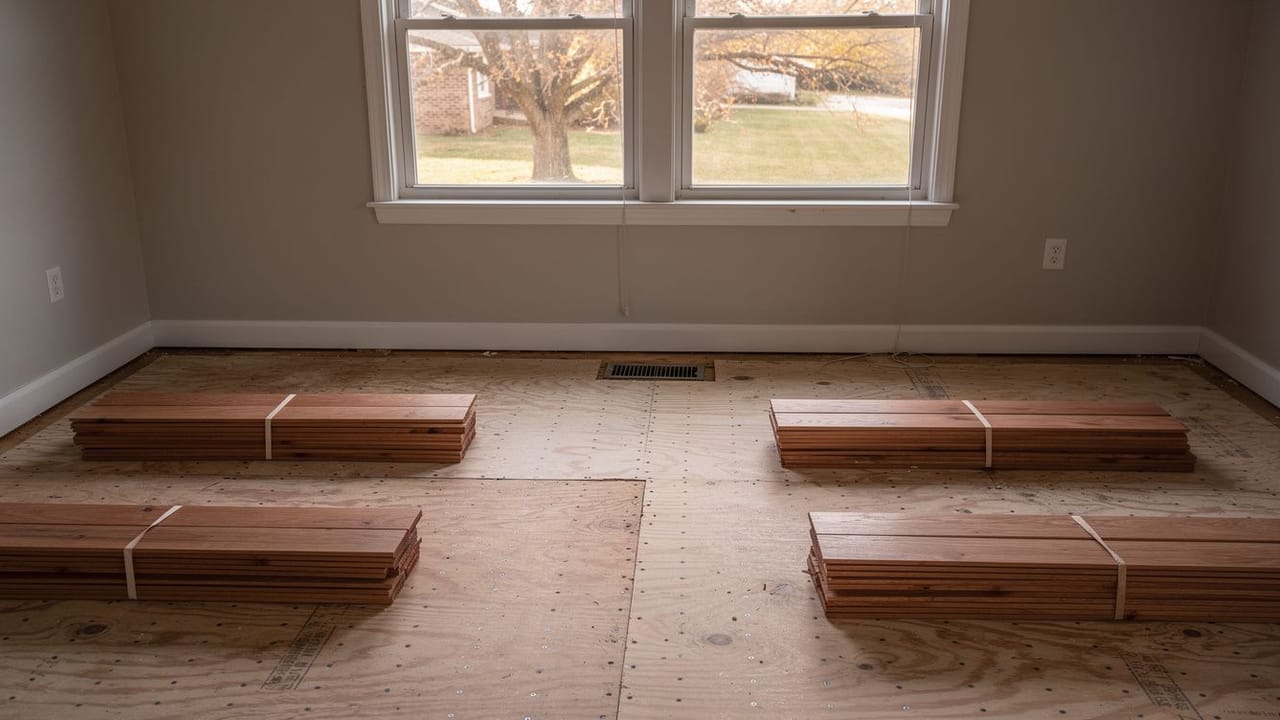
Wood flooring needs to reach equilibrium with the house before it is fastened down. The chapter on drying and moisture control in the USDA Forest Service’s Wood Handbook says flooring is dried to the moisture content it will have in service so the boards neither shrink into gaps nor swell into buckles, and for interior flooring in most of the country it recommends an average of about 8 percent at installation, with individual boards between 6 and 10. To get a realistic average, it says to test at least one piece in ten.
The same chapter lists the practices that get a floor there: meter random boards with a nonpenetrating meter when they arrive and again just before they go down, break open the bundles so every side of each board is exposed to the air inside, and close the house up at night and keep it about 15°F warmer than outdoors for about three days before laying the floor. We trust the meter over the calendar, and our post on what to check before hardwood goes down explains the readings in more detail.
The handbook is also plain about what happens when that is skipped: boards that take up moisture before or after installation shrink once the building is heated, and the floor cracks open between them. Delivering and installing on the same day skips the check entirely, and it is an easy step to drop when a schedule slips, which is why we book delivery ahead of the install rather than for the same morning.
What happens during subfloor preparation?
We take up the old floor, check what is under it for damage, screw down loose panels and level the low spots. On a slab we test for moisture and apply leveling compound where it is needed; our post on flooring over a Nashville concrete slab covers that base on its own.
This is the stage where the surprises turn up: water damage under an old sheet vinyl, a subfloor that was never flat, joists that have moved. Ask that the quote say how those are priced if they are found. Fixing them is our subfloor and repair work, and it is far easier while the floor is open than after the new one is down.
In a house built before 1978 there is one more thing to settle first. Pulling painted shoe molding and trimming painted doors both disturb old paint, and the EPA’s Renovation, Repair and Painting Program says that, in general, anyone paid to do work that disturbs paint in a pre-1978 home must be certified in lead-safe work practices. The EPA puts the share of US homes built before 1978 that still contain some lead-based paint at about three-quarters, so ask about certification before the trim comes off.
- Old floor removed and disposed of
- Subfloor inspected, re-fastened and leveled
- Moisture tested on slab installations
- Transitions and thresholds planned
- Doors trimmed for the new height
Dust and disruption
Sanding a floor for a refinish makes fine wood dust. Ask anyone quoting hardwood refinishing exactly how they seal off the rooms they are working in and whether the sanders are connected to a vacuum.
Installing prefinished LVP or engineered plank involves no sanding on site, so most of the mess on those jobs comes from tearing out whatever was there before. Tile is the exception worth planning around. OSHA’s page on crystalline silica says the fine dust is created when stone, concrete, brick, block and mortar are cut, ground, drilled or crushed, and its silica compliance guide for construction names tile alongside concrete as a silica-containing material and calls for jackhammers and handheld chipping tools to run with either a continuous water spray at the point of impact or a shroud with a vacuum dust collector. Before a tile floor and its mortar bed come out, close the doors to the rest of the house and ask the crew which of those two controls they will use.
After the crew leaves
A floating floor is not glued or nailed down, so there is no adhesive to wait on. Glue-down floors and refinished floors are different: the wait before foot traffic, furniture and rugs is set by the adhesive or finish that went down, and each maker publishes its own. We go through those times for the products on your job before we leave.
Finish fumes are the other part of the wait. The EPA’s page on volatile organic compounds says varnishes and wax contain organic solvents, that elevated levels can persist in the air long after the work is finished, and that the answer is more ventilation and following the label, so keep windows open while the finish cures. On our refinishing jobs rugs go back last, once the finish maker’s full cure time is up. If you would like the whole sequence planned around your house and your calendar, ask us for a free estimate.
Sources
- USDA Forest Service, Forest Products Laboratory, Wood Handbook (FPL-GTR-282, 2021), chapter 13: Drying and Control of Moisture Content and Dimensional Changes — Flooring dried to in-service moisture content; 8 percent average (6 to 10) for interior flooring in most of the US; test at least 10 percent of pieces; meter on arrival and before installation; open bundles; about three days at about 15°F above outdoors; moisture taken up before or after installation causes cracks
- US EPA, Renovation, Repair and Painting Program (updated June 17, 2026) — Anyone paid to disturb paint in pre-1978 housing must in general be certified in lead-safe work practices; about three-quarters of pre-1978 US homes still contain some lead-based paint
- OSHA, Silica, Crystalline — Respirable silica dust is created when cutting, grinding, drilling and crushing stone, concrete, brick, block and mortar
- OSHA, Small Entity Compliance Guide for the Respirable Crystalline Silica Standard for Construction (OSHA 3902-02R) — Tile named with concrete as a silica-containing material; jackhammers and handheld chipping tools need a continuous water spray or a shroud with vacuum dust collection
- US EPA, Volatile Organic Compounds’ Impact on Indoor Air Quality (updated June 23, 2026) — Varnishes and wax contain organic solvents; elevated levels can persist long after the activity; increase ventilation and follow label directions
FAQ
What to Expect During a Flooring Installation — questions
How long does flooring need to acclimate?
For solid hardwood, the Forest Service’s Wood Handbook describes opening the bundles and keeping the house warm for about three days before the floor is laid, with random boards checked on a moisture meter when they arrive and again before installation. We go by those readings rather than a fixed number of days. Engineered wood and LVP each come with the manufacturer’s own instructions, which govern, and we read them before setting a date.
Do I need to move out during flooring installation?
Usually not for an install. We work room by room, and the rest of the house stays usable. Refinishing is the job to think about: nobody walks on the new finish until the maker’s dry time has passed, and the EPA notes that solvent vapors from products like varnish can linger in the air well after the work is done, so staying elsewhere until the house has aired out is worth considering.
Who moves the furniture?
It varies by contractor, so it should be written into the quote rather than assumed. Ask specifically about the heavy and connected items, such as pianos, gun safes and appliances that have to be unhooked, and get the answer in writing before the first day so nobody is arguing about it with the crew standing there.
How do you prepare for a new flooring installation?
Get the house running at its normal heat or air conditioning settings, and have wood delivered ahead of the install so it can be checked. Ask that the quote say how hidden subfloor damage is priced. In a pre-1978 house, confirm lead-safe certification before painted trim comes off, and close interior doors before any tile comes out.